

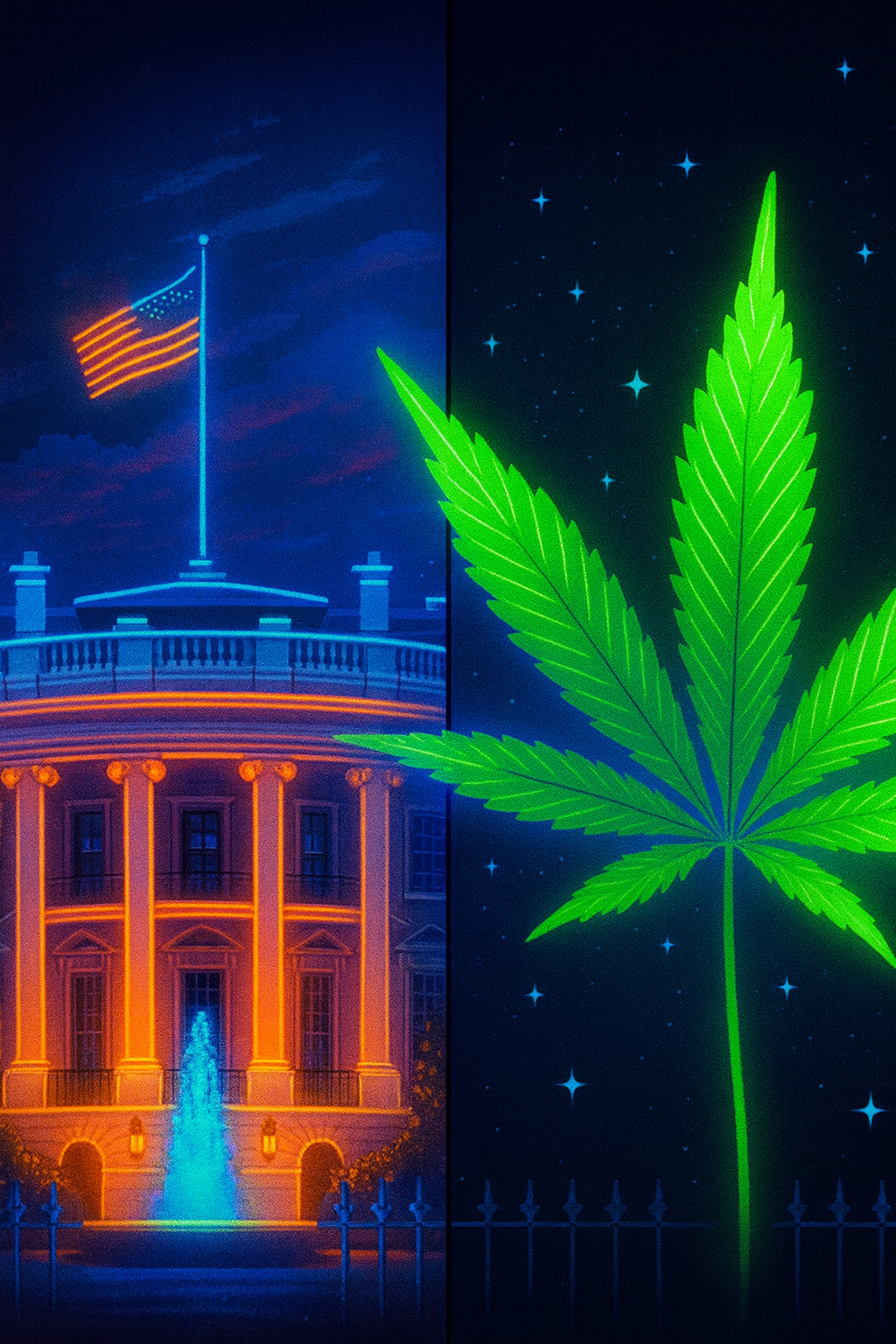
Trump Allies Clash Over Cannabis Rescheduling: Will Change Really Happen?
By: Jennifer Owens
The debate over federal cannabis reform has taken an unusual turn, with two of Donald Trump’s closest allies—longtime advisor Roger Stone and former press secretary Sean Spicer—publicly clashing over whether marijuana rescheduling is likely under a potential Trump administration.
In a recent episode of The Sean Spicer Show, Stone argued that Trump will follow through on a promise to move cannabis from Schedule I to Schedule III of the Controlled Substances Act, a shift that would reduce penalties, allow tax relief for legal businesses, and signal a historic step toward reform. “It makes no sense to have federal law and state law contradict each other,” Stone said. “Forty states have now legalized some form of cannabis, and all I want the president to do is bring federal law in sync with that reality.”
For Stone, the issue is also personal. He recalled how medical cannabis helped his father regain appetite and manage pain during cancer treatment, a firsthand experience that cemented his belief in its medicinal value. Still, Stone echoed Spicer in saying cannabis use should be regulated like alcohol, with restrictions on public consumption.
Spicer, however, was skeptical. Citing Trump’s well-known personal code—“no drugs, no alcohol, no smoking, no tattoos”—he questioned why the former president would champion cannabis reform. “Explain to me why you think Donald Trump, of all people, is going to declassify pot,” Spicer said, adding that he finds the widespread smell of cannabis in cities like New York and Washington, D.C. “disgusting.”
The disagreement underscores a larger divide within conservative politics. While Stone frames rescheduling as a libertarian, states’ rights issue, Spicer doubts Trump’s willingness to act, despite the former president’s campaign trail endorsement of the policy shift.
Beyond their debate, the political battle is heating up in Congress as well. Nine GOP lawmakers recently urged the attorney general to reject the rescheduling proposal, calling it “corrupt and flawed.” At the same time, national drug policy groups are pressing the White House to go further than rescheduling and pursue full legalization, arguing that anything less leaves unresolved issues in banking, criminal justice, and industry regulation.
Rescheduling to Schedule III would not end federal prohibition, but it would allow cannabis businesses to finally claim tax deductions currently denied under IRS code 280E, potentially reshaping the economic landscape of the industry. Still, major obstacles remain, as banks and financial institutions are likely to remain cautious so long as cannabis stays a federally controlled substance.
The clash between Stone and Spicer illustrates the precarious politics of cannabis reform in 2025: caught between shifting public opinion, a booming state-level market, and a federal government struggling to modernize outdated laws. Whether Trump ultimately acts could depend less on personal philosophy and more on political calculation—balancing a conservative base wary of cannabis with a growing national consensus that prohibition has failed.

 All Rights Reserved Hollyweed Times 2025 linstead designed and developed