

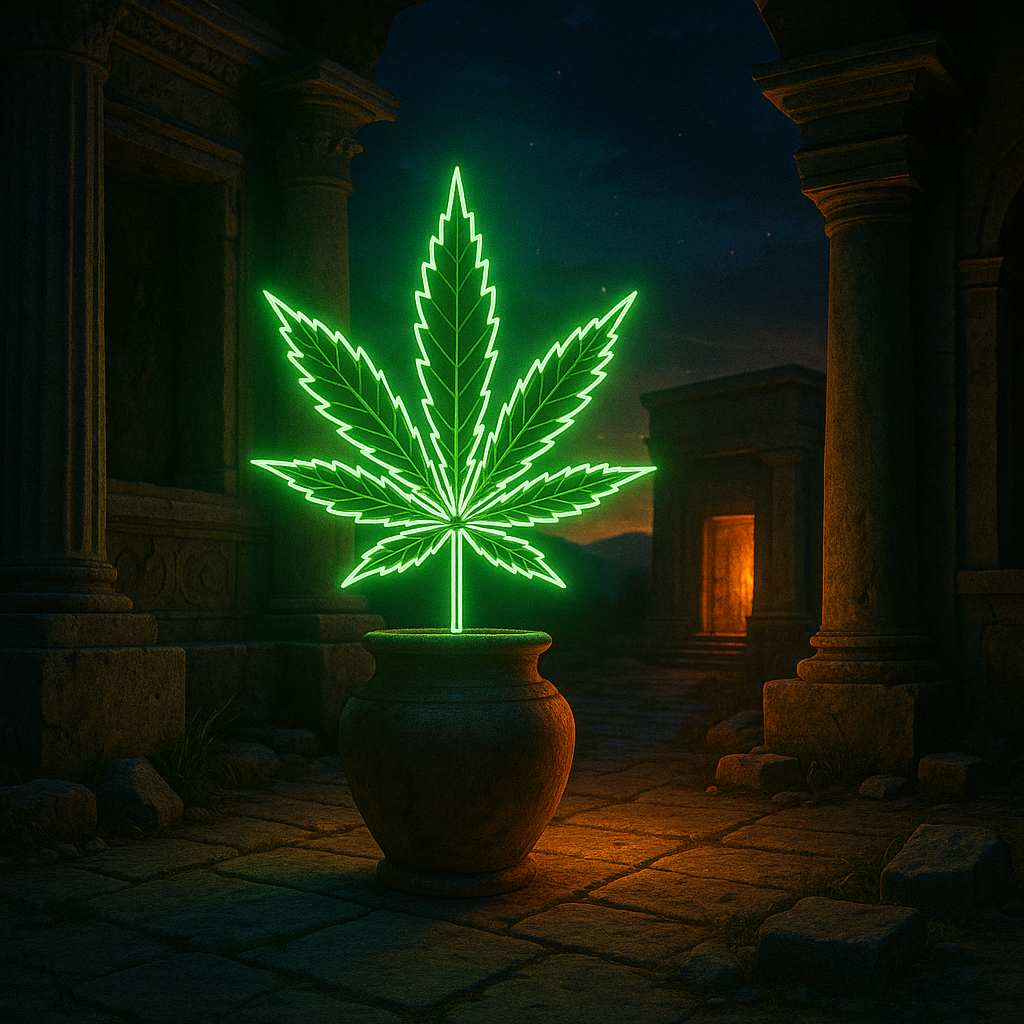
Cannabis Through the Ages: Humanity’s Oldest Companion Plant
Jessica Simpson
Long before cannabis was the center of modern debates over legalization, medicine, and culture, it was one of humanity’s most trusted allies. Archaeological evidence shows that for thousands of years, civilizations across the globe cultivated, traded, and revered the plant not only for its psychoactive properties but also for its fibers, seeds, and spiritual significance.
Roots in Central Asia
Cannabis is believed to have originated on the steppes of Central Asia, in regions that now span Mongolia and southern Siberia. Archaeobotanical findings suggest its use as far back as 10,000 years ago, making it one of the earliest domesticated crops. Initially, cannabis may have been prized for its tough fibers, which were woven into rope and cloth, and for its protein-rich seeds, a valuable food source for early societies.
Cannabis and Ancient Rituals
As humans migrated, so did cannabis. By around 500 BCE, evidence points to its use in spiritual and funerary rites. Archaeologists in western China discovered wooden braziers containing cannabis seeds and burned residue in tombs of the Jirzankal Cemetery, suggesting it was burned ritually for its psychoactive effects.
The Scythians nomadic tribes described by the Greek historian Herodotus famously used cannabis smoke in purification rituals. According to his accounts, they would throw hemp seeds onto hot stones inside tents, inhaling the vapors as part of communal ceremonies.
Medicine of the Ancients
Ancient medical texts also point to cannabis’s therapeutic reputation. In China, the legendary Emperor Shen Nung (around 2700 BCE) included cannabis in his pharmacopeia, recommending it for ailments ranging from gout to rheumatism. Ancient Indian texts like the Atharva Veda (circa 1500 BCE) praised cannabis as one of the five sacred plants, associated with the god Shiva and used in traditional preparations such as bhang, a cannabis-infused drink still consumed during festivals like Holi.
In Egypt, papyrus scrolls dating back nearly 4,000 years reference cannabis for easing inflammation and glaucoma-like conditions. Meanwhile, Greek physicians such as Dioscorides and Galen prescribed cannabis for earaches, pain, and even sexual health.
Hemp Empires
While some cultures focused on cannabis’s psychoactive uses, others valued its industrial potential. Hemp textiles dating back to at least 8,000 BCE have been uncovered in modern-day Turkey. By the Middle Ages, hemp was indispensable in Europe, supplying ropes and sails that powered the Age of Exploration. Nations with robust hemp industries gained an edge in trade and naval dominance.
A Plant of Paradox
Despite its deep roots in medicine and industry, cannabis’s psychoactive side often drew suspicion. As empires rose and fell, the plant’s reputation shifted between sacred, medicinal, and illicit. By the 20th century, political forces not ancient traditions shaped global prohibition, pushing cannabis into the shadows until recent decades.
Lessons From the Past
Today, as societies reevaluate cannabis’s place in medicine, wellness, and culture, history reminds us that this plant has always been more than a recreational drug. It is a versatile crop, a healing herb, and a spiritual bridge that has accompanied humanity for millennia.
In many ways, the “cannabis revolution” of the 21st century is less about discovery and more about rediscovery reconnecting with knowledge that our ancestors, from the Scythians to the scholars of ancient China, once took for granted.

 All Rights Reserved Hollyweed Times 2025 linstead designed and developed